
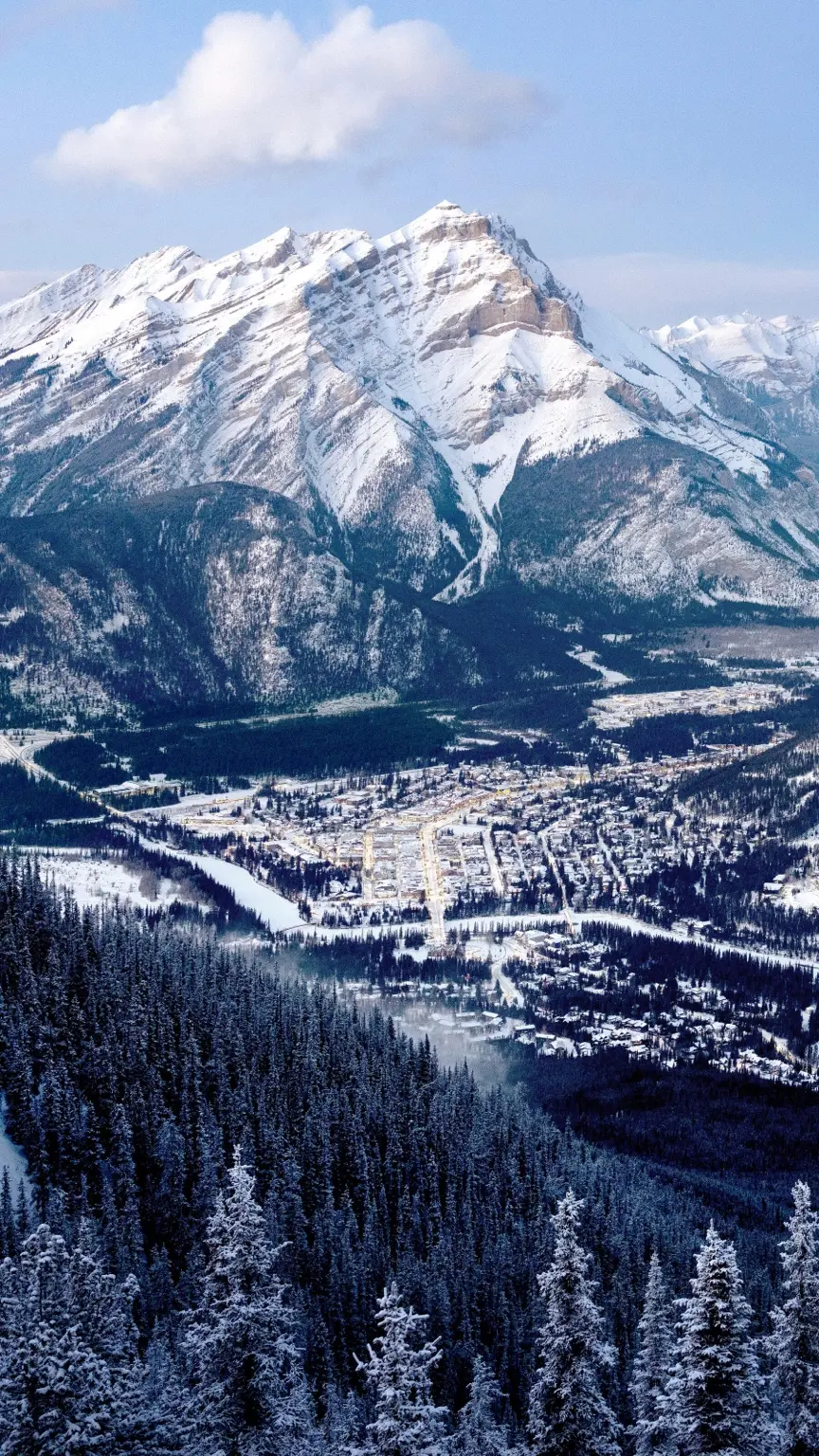
Why Banff deserves careful planning
SkiBig3 connects Banff Sunshine, Lake Louise Ski Resort, and Mt. Norquay under one lift-ticket system. Each mountain has a different terrain mix, and daily snow, visibility, lift operations, and road conditions can change the best plan.
A good trip starts by matching the mountain experience to the group. First-time visitors, families, advanced skiers, non-skiers, and mixed-ability groups need different lodging, lesson, ticket, and daily-flow decisions.
Choose the right Banff base
Town of Banff
Best for travelers who want the widest mix of dining, shopping, après, walkability, and easy shuttle access to all three ski resorts.
Lake Louise
A quieter mountain-village base near Lake Louise Ski Resort, well suited to travelers who prioritize scenery, resort access, and a slower evening atmosphere.
Resort-area stays
Staying closer to Banff Sunshine, Lake Louise, or Mt. Norquay can reduce part of the daily commute, but dining choices, evening flexibility, and shuttle access should be checked carefully.
No area is automatically best. The right choice depends on the lifts you expect to use, walking tolerance, dining priorities, children, lessons, and whether non-skiers need easy access to village activities.
Getting there and getting around
Banff is roughly 130 kilometres (81 miles) west of Calgary. Most air travelers arrive through Calgary International Airport, then continue by scheduled shuttle, private transfer, or rental car.
Many visitors can skip a rental car after arrival. Downtown Banff is walkable, Roam Transit connects key areas, and seasonal ski shuttles serve Banff Sunshine, Lake Louise Ski Resort, and Mt. Norquay. Airport transfers and late arrivals should still be planned before departure.
Timing and trip length
Winter is the main ski and snowboard season, while summer brings biking, hiking, sightseeing, lakes, golf, and festivals. Exact operating dates and accessible terrain vary by weather, maintenance, and seasonal schedules.
Four to six nights works well for many ski-focused trips because travel from Calgary uses part of the arrival and departure days. Mixed groups may want an extra day for lessons, village time, recovery, weather flexibility, or non-ski activities.
Where to spend and where to save
Spend first on the decisions that improve every day: the right base, realistic mountain access, suitable lessons, and transportation that works with flight times. A cheaper room can become poor value if it adds difficult transfers or long daily walks in ski gear.
Save by choosing only the paid upgrades your group will actually use, comparing ticket products for the exact dates, arranging rentals early, and leaving room for a lower-cost village or recovery day rather than forcing every day to be a full mountain day.
Common Banff planning mistakes
- Choosing lodging without checking the exact walk, lift, shuttle, or bus route.
- Assuming every skier or snowboarder in the group should follow the same mountain plan.
- Underestimating transfer time between Calgary and Banff in winter conditions.
- Booking every day as a full ski day without weather or recovery flexibility.
- Forgetting that international entry requirements depend on citizenship and travel documents.
A balanced five-night Banff structure
Arrival day
Transfer from Calgary, check in, collect rentals if timing allows, and learn the route from the hotel to the lifts.
Mountain days 1 and 2
Start with the terrain and mountain that fit the group best. Use lessons or a guide when they would make navigation and confidence easier.
Flexible middle day
Choose between another mountain day, a slower village day, sightseeing, or recovery based on conditions and energy.
Final mountain day
Return to favourite terrain or explore the second mountain when lift status, visibility, and ability levels support it.
Departure day
Allow generous time for the Calgary transfer and the airport requirements for an international flight.
Banff FAQ
Is Banff only for expert skiers?
No. The resort has beginner terrain and lessons as well as advanced alpine terrain. The key is choosing the right meeting points, instruction, and daily plan for each ability level.
Can snowboarders visit SkiBig3?
Yes. SkiBig3 accommodates both skiers and snowboarders.
Do U.S. citizens need a visa or eTA?
U.S. citizens traveling with a valid U.S. passport do not need a Canadian visa or eTA. Travelers with other citizenship or documents should use Canada’s official entry-requirements checker.
Should I check mountain conditions before each day?
Yes. Lifts and terrain can change because of wind, visibility, weather, safety checks, or seasonal operations.